ZAMBAKET
A façade starts before colour: what makes a home look good?
Form, windows, shadows and materials: how a considered façade takes shape before choosing its colour.
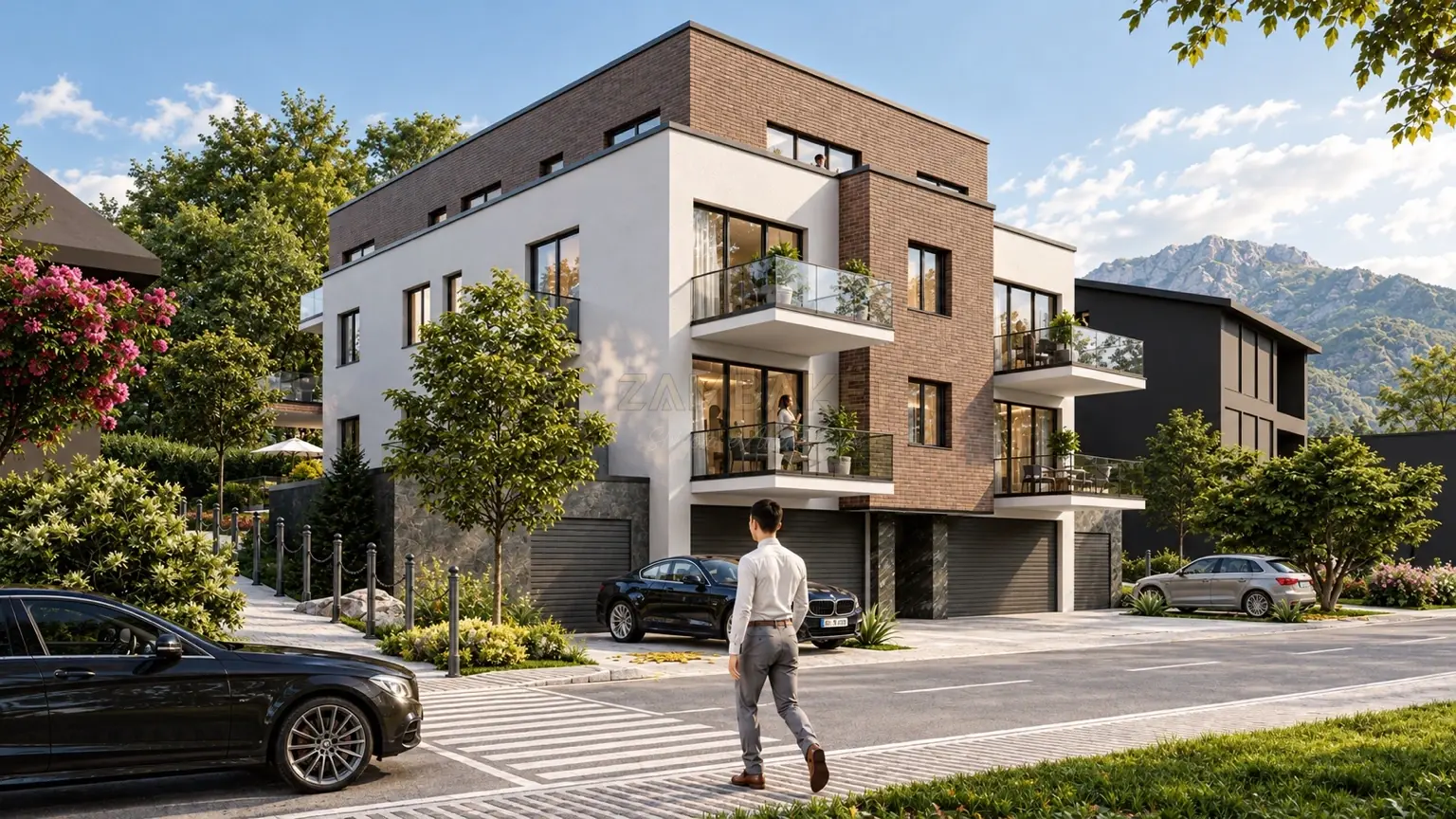
Before choosing white render, stone or timber cladding, it helps to look at the building’s form. A home’s appearance emerges from the relationship between volumes, openings, materials and light. Colour is one part of that composition.
First, see the house as a whole
When assessing a façade, we often focus on a material we like. Yet form comes before surface: the building’s width relative to its height, the relationship between floors, the roof and the way the entrance reads. An expensive material will not, by itself, resolve an unclear composition.
A useful design exercise is to view the façade with few colours and understated textures. Is the entrance clear? Do the volumes relate to one another? Is there an order that can be understood without decoration? These questions support discussion without turning taste into a universal formula.
Windows have a life inside and an appearance outside
From the street, windows create rhythm. From inside, they provide daylight, views, ventilation and a connection to the garden. A considered decision addresses both sides. A row of windows may look orderly in a drawing, but it also needs to work with furniture, privacy and the use of each room.
Rhythm does not require every opening to be identical. It can come from shared alignment, repeated dimensions or a deliberate variation. The aim is for differences to make sense within the whole.
Depth creates shadow and character
A façade is seen in the morning, at midday and in the evening. Frames, recesses, balconies and overhangs change how it reads as the light moves. Even a surface with few materials can have character when it has depth and clear relationships between its elements.
These elements also need technical assessment. If an overhang is intended to protect a window from sunlight, its dimensions need to reflect orientation and the seasonal sun path. A projection drawn solely for visual effect does not guarantee appropriate shading.
Materials need considered meeting points
Selecting materials does not end with a sample board. We need to understand where each material starts and finishes, how it turns a corner and how it meets a window, plinth or roof. These transitions help an idea feel resolved.
A limited palette can make a composition clearer, but the number of materials is not a measure of quality. Their individual roles matter more. Beyond appearance, cladding requires assessment for durability, maintenance and the suitability of the system for the building.
The façade also shapes comfort
A large glazed area can offer views and abundant daylight, while its thermal impact depends on orientation, glazing type, frames and shading. The question is therefore both how the window looks and how the room will feel in use.
Design needs to consider sunlight, privacy and neighbouring buildings together. For a home in Kosovo, solutions must respond to the local climate and the specific site. Examples from other places can inform discussion, but orientations and dimensions should not be copied mechanically.
Consider its appearance several years later
A rendering shows a building at a chosen moment. In use, the façade faces rain, dust, sunlight and maintenance work. Choosing cladding means considering how it will be cleaned, what care it requires and how it can be repaired.
Details near the ground, windows and upper edges deserve particular attention during design. Material documentation and manufacturers’ instructions help clarify what is required during construction and subsequent use.
Before approval, ask to see the whole picture
One view from the most flattering angle cannot show everything. Ask to see every elevation, the relationship with the terrain and a discussion of the materials and key details. This connects the decision to the building that will be constructed, as well as to an attractive image.
A convincing façade emerges when form, life inside and construction are developed together. Colour completes that work. Choosing it becomes easier once the main decisions have a clear direction.
Five questions for your façade
- Are the entrance and arrangement of volumes clear?
- Do the windows serve the spaces inside?
- Have orientation and shading been considered?
- Have the junctions between materials been resolved?
- Do we understand the maintenance the solution requires?
Sources
- YourHome — Cladding systems
- YourHome — Shading
- YourHome — Glazing
- Sources support the technical principles concerning cladding, glazing and shading. Compositional assessments are editorial viewpoints. Australian guidance does not replace design for local climate and requirements.
Credits
- Text: ZAMBAKET Editors.
- Image: architectural visualization from the ZAMBAKET portfolio. The residential building illustrates volumes, openings and materials; the article does not describe the specific reasons behind this project’s design decisions.